
What is BPC-157?
BPC-157 is a synthetic 15-amino-acid pentadecapeptide with the sequence Gly-Glu-Pro-Pro-Pro-Gly-Lys-Pro-Ala-Asp-Asp-Ala-Gly-Leu-Val (CAS 137525-51-0, molecular formula C62H98N16O22). The peptide carries an unusually high proportion of proline residues (5 of 15 amino acids), a structural feature associated with resistance to enzymatic degradation. Research characterizes BPC-157 in cultured cell systems and through biochemical assays examining receptor interactions and signaling-pathway modulation.
15amino acids in the BPC-157 pentadecapeptide sequence
Sequence composition and structural characterization
BPC-157 is a synthetic 15-amino-acid pentadecapeptide whose sequence corresponds to a fragment identified in gastric juice. The sequence Gly-Glu-Pro-Pro-Pro-Gly-Lys-Pro-Ala-Asp-Asp-Ala-Gly-Leu-Val contains an unusually high proportion of proline residues—5 of the 15 total residues—a structural feature commonly associated in peptide biochemistry with greater resistance to enzymatic proteolysis and higher stability in aqueous solution. The molecular formula is C62H98N16O22, with a molar mass of approximately 1511 g/mol, making it substantially larger than shorter peptide sequences[1].
The pentadecapeptide sequence contains multiple charged and polar residues (one glutamic acid for negative charge, two aspartic acid residues for negative charge, and one lysine residue for positive charge) distributed throughout the backbone. The proline-rich core constrains the peptide backbone geometry through the cyclic structure of proline rings, limiting rotational flexibility around the N-alpha to carbonyl bonds. This conformational constraint contributes to the peptide's structural rigidity and three-dimensional conformation, distinguishing BPC-157 from peptides with flexible backbone structures[1].
The high proline content creates a peptide backbone with restricted conformational flexibility compared to peptides lacking proline residues. Proteolytic enzymes evolved to cleave peptide bonds in extended backbone structures, so the constrained geometry of proline-rich peptides provides reduced accessibility to protease active sites. This structural feature contributes to BPC-157's relative resistance to non-specific proteolytic degradation, a property relevant to the peptide's stability in various chemical and biochemical environments[1].
Because BPC-157 is made by solid-phase synthesis, its identity check rests on the same analytical chemistry applied to other synthetic peptides. LC-UV separation of crude solid-phase synthesis mixtures, with electrospray mass spectrometry identifying the target peptide and its side products by calculated molecular mass, has been described as a key tool for characterising and purifying synthetic peptide hormones[6].
Molecular mechanism and signaling-pathway characterization
Research characterizes BPC-157 as modulating multiple signaling pathways documented in cultured cell systems and through biochemical assays. The pentadecapeptide is described as modulating the nitric oxide (NO) system, a key regulatory pathway for vascular function and cellular signaling. The NO-system modulation involves changes in nitric oxide synthase expression and activity, measurable through enzyme assays and gene-expression quantification in cultured cell systems. These molecular interactions are characterized through standard biochemical techniques without reference to organism-level measurements[1].
BPC-157 is also characterized as modulating vascular endothelial growth factor (VEGF) signaling and focal adhesion kinase (FAK) pathways in cultured endothelial cells and other differentiated cell types. These signaling mechanisms are measured through phosphorylation assays (detecting activated signaling proteins), gene-expression quantification via reverse-transcription polymerase chain reaction, and measurement of downstream signaling intermediates. The angiomodulatory characterization describes BPC-157's capacity to modulate vascular-system signaling in cultured cell preparations through these molecular pathways[2].
The pleiotropic nature of BPC-157 signaling reflects its apparent capacity to modulate signaling across multiple cell types and tissue contexts examined in cultured cell systems. Different cultured cell preparations show BPC-157-associated changes in signaling-pathway activation, suggesting that the pentadecapeptide engages with multiple molecular targets. This multiplicity of signaling interactions is characteristic of peptides with substantial structural complexity and multiple potential binding surfaces compared to shorter peptide sequences[5].
Cultured cell systems and biochemical assay approaches
BPC-157 is characterized in diverse cultured cell types including endothelial cells, fibroblasts, neuronal cell lines, and other differentiated cell preparations. In cultured endothelial cells, BPC-157 is measured for modulation of tube-formation responses (three-dimensional assembly of cultured cells in basement-membrane matrices), migration in transwell assays, and proliferation. Cell viability is assessed through standard viability assays, and signaling responses are quantified through phosphorylation assays using phospho-specific antibodies and reverse-transcription polymerase chain reaction[2].
In cultured fibroblast cell lines, BPC-157 is characterized for modulation of collagen synthesis and matrix metalloproteinase expression, both measured through gene-expression analysis and protein quantification assays. Cultured neuronal cell preparations show BPC-157-associated changes in cell viability and signaling-pathway activation under oxidative stress conditions, measured through standard biochemical assays. These cultured-cell characterizations focus on molecular mechanisms and signaling responses in laboratory cell systems, explicitly excluding intact tissue architecture or organism-level physiology[2].
Receptor interactions and signaling convergence
The molecular interactions through which BPC-157 modulates signaling in cultured cells involve engagement with receptor proteins and signaling intermediates. The pentadecapeptide's structural complexity—reflecting its 15-residue length and heterogeneous amino acid composition—permits multiple potential binding interactions compared to shorter peptides. These interactions are characterized through cultured-cell assays measuring receptor-mediated signaling activation, a standard approach for identifying peptide-receptor engagement in defined in-vitro systems[2].
Multiple signaling pathways (NO-system, VEGF, FAK) appear to converge in BPC-157's characterization across different cultured cell types, suggesting that the pentadecapeptide may engage with overlapping or interconnected molecular signaling networks. This convergence of multiple signaling pathways at the molecular level represents a form of pathway integration characteristic of larger peptides with multiple potential binding modes. The characterization of these signaling convergences depends entirely on cultured-cell assays and biochemical measurements without reference to organism-level integration[5].
Analytical characterization and chemical identity
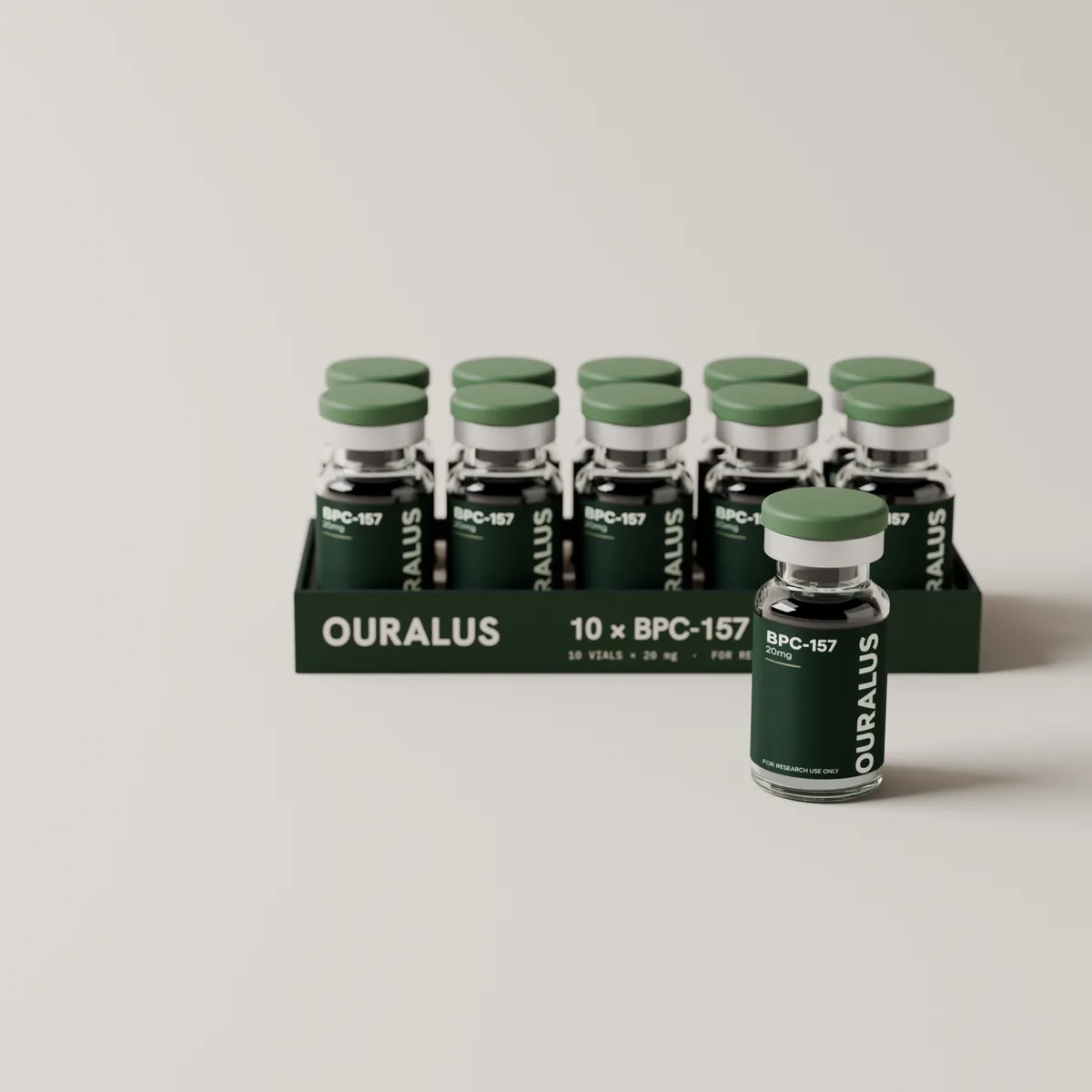
BPC-157 is characterized through standard analytical chemistry techniques including high-performance liquid chromatography (HPLC), mass spectrometry, and peptide-sequence analysis. The pentadecapeptide is supplied as a lyophilized (freeze-dried) powder, a standard pharmaceutical preparation for peptide research use. HPLC methods provide chromatographic separation and quantification of synthetic BPC-157, while mass spectrometry confirms the molar mass and documents characteristic fragmentation patterns. Amino acid composition analysis confirms the presence of all 15 expected residues in the correct stoichiometric ratios[1].
The chemical stability of BPC-157 depends on storage conditions, temperature, pH, and the presence of degradative agents. Stability in aqueous solutions is influenced by the peptide's proline-rich structure, which provides some protection against non-specific proteolytic degradation. Storage at reduced temperature and in desiccated form (lyophilized powder) extends shelf-life compared to aqueous solutions, where degradation pathways may include hydrolysis, oxidation, and microbial contamination. Standard analytical methods (HPLC, mass spectrometry) can distinguish BPC-157 from degradation products under various stress conditions[1].
| Study | Result | Ref |
|---|---|---|
| Endothelial cell tube formation in cultured basement-membrane matrices | BPC-157 measured for modulation of cultured endothelial cell assembly into tubular structures; responses quantified through microscopy and image analysis | [2] |
| Nitric oxide and signaling-protein phosphorylation in cultured endothelial cells | BPC-157 characterized for modulation of nitric oxide synthase activity and endothelial nitric oxide synthase expression; phosphorylation assays detect signaling-protein activation | [1] |
| Collagen and matrix metalloproteinase expression in cultured fibroblasts | BPC-157 measured for modulation of collagen transcript abundance and matrix metalloproteinase gene expression via quantitative reverse-transcription polymerase chain reaction | [2] |
| Cell viability response to oxidative stress in cultured neurons | BPC-157 characterized in cultured neuronal cell lines for modulation of cell viability under oxidative-stress conditions; signaling-pathway activation measured via biochemical assays | [3] |
| Growth-factor signaling and receptor-pathway characterization | BPC-157 characterized for modulation of signaling in cardiac cells through nitric oxide and prostaglandin pathways; measurements via phosphorylation assays and gene-expression quantification | [4] |
| Pleiotropic signaling characterization across cell types | BPC-157 characterized as modulating signaling in multiple cultured cell types through diverse pathways; mechanisms documented through cell-based assays and biochemical methods | [5] |
Frequently asked questions
What is the chemical structure of BPC-157?
BPC-157 is a synthetic 15-amino-acid pentadecapeptide with the sequence Gly-Glu-Pro-Pro-Pro-Gly-Lys-Pro-Ala-Asp-Asp-Ala-Gly-Leu-Val. The molecular formula is C62H98N16O22 (CAS 137525-51-0) with a molar mass of approximately 1511 g/mol. The sequence contains an unusually high proportion of proline residues (5 of 15), a structural feature associated with resistance to enzymatic proteolysis. Multiple charged residues (glutamic acid, aspartic acid, lysine) contribute to the peptide's solubility and charge distribution.
What signaling pathways does BPC-157 modulate in cultured cells?
BPC-157 is characterized as modulating multiple signaling pathways in cultured cell systems, including the nitric oxide (NO) system, vascular endothelial growth factor (VEGF) pathway, and focal adhesion kinase (FAK) signaling. These molecular mechanisms are measured through biochemical assays including phosphorylation assays (detecting activated signaling proteins), gene-expression quantification via reverse-transcription polymerase chain reaction, and enzyme-activity assays. The pleiotropic nature reflects the peptide's apparent capacity to modulate signaling across multiple cultured cell types.
Which cultured cell systems are used to study BPC-157?
BPC-157 is characterized in diverse cultured cell types including endothelial cells (for vascular-signaling studies), fibroblasts (for collagen synthesis and matrix metalloproteinase characterization), and neuronal cell lines (for oxidative-stress responses). In cultured endothelial cells, tube formation, migration, and proliferation are measured. In fibroblasts, collagen expression and matrix protein synthesis are quantified. These cultured-cell systems enable investigation of signaling mechanisms in laboratory systems without intact tissue architecture.
How is BPC-157 characterized analytically?
BPC-157 is characterized through high-performance liquid chromatography (HPLC) for chromatographic separation and quantification, mass spectrometry for determination of molar mass and amino acid composition confirmation, and amino acid analysis. The peptide is supplied as a lyophilized (freeze-dried) powder. HPLC methods provide identification and purity assessment, while mass spectrometry produces characteristic fragmentation patterns. These standard analytical methods enable identification and quantification of synthetic BPC-157 and detection of degradation products.
What does the literature NOT establish about BPC-157?
The literature does not establish BPC-157 absorption, systemic distribution, metabolism, or clearance in living organisms. Biodistribution in intact systems, tissue accumulation, or organism-level measurements remain uncharacterized in the literature. Whether the pentadecapeptide crosses biological barriers, accumulates in particular tissues, or undergoes modification in living systems are all unknown. The established literature is limited to cultured cell systems, biochemical assays, and analytical characterization.
References
- Stable gastric pentadecapeptide BPC 157-NO-system relation. Current pharmaceutical design. 2014. PMID 23755725
- BPC 157 and blood vessels. Current pharmaceutical design. 2014. PMID 23782145
- Pentadecapeptide BPC 157 and the central nervous system. Neural regeneration research. 2022. PMID 34380875
- Stable Gastric Pentadecapeptide BPC 157 as Useful Cytoprotective Peptide Therapy in the Heart Disturbances, Myocardial Infarction, Heart Failure, Pulmonary Hypertension, Arrhythmias, and Thrombosis Presentation. Biomedicines. 2022. PMID 36359218
- Multifunctionality and Possible Medical Application of the BPC 157 Peptide-Literature and Patent Review. Pharmaceuticals (Basel, Switzerland). 2025. PMID 40005999
- Liquid chromatography-mass spectrometry approach for the characterization and purification of crude synthetic peptide hormones. Analytical and bioanalytical chemistry. 2003. PMID 12898112
RUO For laboratory research use only. Not for human or veterinary use. This page summarises published studies and is not medical advice.