
GHK-Cu vs BPC-157
GHK-Cu and BPC-157 are both peptides studied in published research, but they differ in structure, size, and the breadth of models used to investigate them. Both appear in the scientific literature, though in different research contexts and across different tissue systems.
This comparison examines how these molecules differ at the chemical level, what models researchers use to study each, and the types of investigations that characterize their research literature.
How do GHK-Cu and BPC-157 differ in structure?
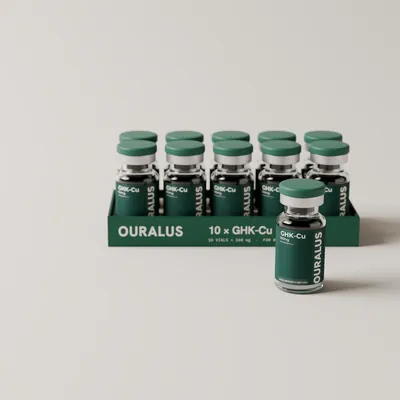
GHK-Cu is a tripeptide (three amino acids: glycine-histidine-lysine) with a bound copper atom. The copper coordinates to the imidazole side chain of histidine and the terminal amino group, forming a stable metal-peptide complex [4].
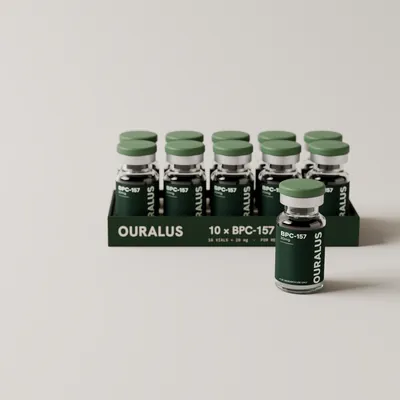
BPC-157 is a pentadecapeptide, containing fifteen amino acids. It is a gastric-derived peptide without a coordinated metal center. These structural differences result in distinct molecular properties including size, charge distribution, and binding characteristics [6].
What research models are used for GHK-Cu versus BPC-157?
GHK-Cu research predominantly uses in vitro cell culture (skin fibroblasts, keratinocytes) and simple whole-organism models such as zebrafish larvae [3]. Mammalian models for GHK-Cu are rare in the published literature.
BPC-157 research encompasses a broader range of models. Published studies include cell culture, rodent models (mice and rats) with surgical injury or disease induction [10], and increasing numbers of human case reports and observational studies [8]. The literature on BPC-157 contains both acute and chronic injury models.
How do the research literatures differ in size and scope?
The published GHK-Cu literature is smaller, with most studies appearing in specialized dermatology and cosmetic science journals. Systematic reviews of peptides in dermatology cover GHK-Cu as one compound among several [1].
BPC-157 has accumulated a larger research base spanning multiple organs and tissues. Reviews dedicated to BPC-157 alone examine its investigation in ischemia-reperfusion injury [10], liver cytoprotection [6], orthopedic injury [8], and oral and maxillofacial conditions [9]. This breadth reflects different research traditions across different medical specialties.
What tissue systems and pathways do researchers study in each compound?
GHK-Cu research focuses on skin and integumentary biology. Studies measure oxidative stress markers, collagen expression, and inflammatory cytokines in cultured skin cells [2] and in zebrafish larval systems [3].
BPC-157 research spans hepatic protection [6], musculoskeletal injury models (tendon, ligament, bone) [11], vascular and ischemic injury [10], and neurological conditions including nerve injury [9]. The range of tissue systems studied is substantially broader.
How do mechanisms of action differ between the compounds?
In GHK-Cu, the copper center appears central to activity. Investigations examine the tripeptide's redox properties and its ability to modulate intracellular copper levels and redox signaling in skin cells [5]. The metal coordination is integral to the compound's function.
BPC-157 mechanisms proposed in research include modulation of angiogenic factors, stabilization of nitric oxide pathways, and anti-inflammatory signaling [6]. BPC-157 lacks a metal center; its peptide backbone and sequence convey its activity. Proposed mechanisms differ substantially from those under investigation for GHK-Cu.
The differences in mechanism reflect the compounds' distinct chemistries. GHK-Cu research emphasizes redox chemistry and metal coordination, while BPC-157 research focuses on peptide-receptor interactions and signaling cascade modulation. These mechanistic distinctions suggest they would not necessarily be interchangeable in biological systems.
What types of studies characterize each literature?
GHK-Cu studies are predominantly mechanistic in situ examinations: cell culture assays, formulation characterization, and acute inflammatory challenges in larvae. Most papers present in vitro or basic biology work rather than translational studies.
BPC-157 literature includes systematic reviews {42794771, 42885452}, narrative reviews examining clinical applications {42943255, 42876687}, case reports from clinical settings [9], and comparative studies of multiple peptides in disease models [7]. This includes more translational and clinical-stage investigation.
The methodological difference reflects research maturity and clinical relevance. GHK-Cu remains largely in development and characterization phases, while BPC-157 has progressed to systematic review and case-series documentation. This difference suggests different developmental timelines and clinical translation efforts for each compound.
Frequently asked questions
Are GHK-Cu and BPC-157 chemically similar?
No. GHK-Cu is a tripeptide bound to copper; BPC-157 is a fifteen-amino-acid peptide without a metal center [6]. They differ in size, chemical structure, charge, and properties. The copper in GHK-Cu is not present in BPC-157.
Do researchers study both compounds in the same models?
Which compound has more published research?
BPC-157 has a substantially larger published literature. Multiple dedicated reviews and systematic studies examine BPC-157 {42794771, 42885452}, whereas GHK-Cu appears less frequently and typically in reviews of broader peptide families [1].
Can findings from one compound predict outcomes for the other?
The structural and biological differences suggest caution in cross-translation. Different models, tissues, and mechanisms limit direct comparison. Research on each compound should be evaluated independently.
Why has BPC-157 accumulated more research than GHK-Cu?
BPC-157 emerged from isolated discovery in gastric tissue and entered the research literature earlier, with decades of investigation across multiple tissues and disease models. GHK-Cu research is more recent and has been concentrated in dermatology and cosmetic applications, resulting in a smaller overall literature.
What amino acids compose each peptide?
How do the research communities differ for these compounds?
GHK-Cu research appears primarily in cosmetic science, dermatology, and materials science journals. BPC-157 research spans hepatology, orthopedic surgery, gastroenterology, and regenerative medicine {42943255, 42885452, 42876687}, reflecting broader clinical interest and multidisciplinary investigation.
Are there any direct studies comparing these peptides?
Published literature does not contain studies directly comparing GHK-Cu and BPC-157 in the same models or disease contexts. Both appear in reviews of peptides broadly, but head-to-head research is absent.
References
- Joerg L, Zafar K, Jagdeo J. Peptides for Hair Growth and Treatment of Hair Loss and Alopecia: A Systematic Review. J Drugs Dermatol. 2026;25(11):1026-1032. PMID 42976838
- Wang J, Tao K, Huang H, Chang H. Augmented Skin Beneficial Effects of Thermus Thermophilus and Bacillus Subtilis Mixed-Culture Ferment Extract by Tripeptide GHK-Cu. Skin Res Technol. 2026;32(8):e70360. PMID 42573538
- Hu J, Zhang C, Wang F. Glycyl-L-histidyl-L-lysine-Cu2(+) (GHK-Cu) Attenuates CuSO(4) or LPS induced-inflammation in Zebrafish larvae model. Eur J Pharmacol. 2026;1023:178880. PMID 41997403
- Ogórek K, Mierzwa M, Drozd M, Sobiepanek A, Matczuk M. Characterization of copper tripeptide-loaded lipid carriers and their stability in complex cosmetic matrices. J Chromatogr A. 2026;1789:467540. PMID 42887096
- An injectable hydroxyapatite microsphere filler loaded with GHK-Cu tripeptide for anti-Inflammatory and antioxidant. Colloids Surf B Biointerfaces. 2025. PMID 40716276
- Sever M, Zenko Sever A, Klicek R, et al. Possibilities for Cytoprotective Liver Therapy, Stable Gastric Pentadecapeptide BPC 157, and Standard Agents-A Narrative Review. Pharmaceuticals (Basel). 2026;19(10):1559. PMID 42943255
- Tham A, Hodgkins CW, Kennedy JG. Investigational Peptides in Orthopaedic Practice: Evidence, Safety, and Patient Counseling for BPC-157, Thymosin Beta-4, and TB-500. J Am Acad Orthop Surg. 2026. PMID 42937313
- Poolton JT, Minett J, Kazmi A. Human evidence for BPC-157 in orthopaedic and regenerative medicine: a systematic review of efficacy and safety. Acta Orthop Belg. 2026;92(3). PMID 42885452
- Froum S, Estrin N, Pico G, Yakubov M, Ahmad P, LaValle J. Case Report: Regenerative peptides for Inferior alveolar nerve injury: a narrative review with hypothesis-generating three clinical cases. Front Oral Health. 2026;7:1907109. PMID 42876687
- Demirtaş H. BPC 157 in Rodent Ischemia-Reperfusion Injury: A Critical Review of Preclinical Evidence. Int J Mol Sci. 2026;27(18):8344. PMID 42794771
- Biçer O, Adanir O, Güleryüz Y, et al. Effects of BPC-157 and TB-500 on Achilles tendon healing in rats: A histopathological and biomechanical study. Jt Dis Relat Surg. 2026;37(3):822-837. PMID 42542926
RUO For laboratory research use only. Not for human or veterinary use. This page summarises published studies and is not medical advice.